 Nuvo Platform
 Nuvo Intelligence
 Customer Onboarding
 Portfolio Management
 Vendor Onboarding
 Accounts Receivable
 Alcohol & Beverage
 Apparel
 Building Materials
 Chemicals
 Distribution
 Food Service
 Heavy Equipment
 Manufacturing



Loading

Order-to-cash (O2C) spans sales, credit, AR, and finance. Most teams run each stage on a different system, creating handoffs that lead to revenue leakage through data re-keying and lost customer context. Credit approves a buyer without seeing payment history, and collections calls about invoices already paid.
Order-to-cash software connects those stages so data moves cleanly between them, improving cash flow and accelerating payment collection. Some platforms cover the back half, from invoicing through cash application. Others connect the full loop from onboarding forward. Here's how the strongest options compare in 2026.
These six platforms cover different stretches of the order-to-cash process, from invoice-forward tools to full onboarding-to-cash systems.
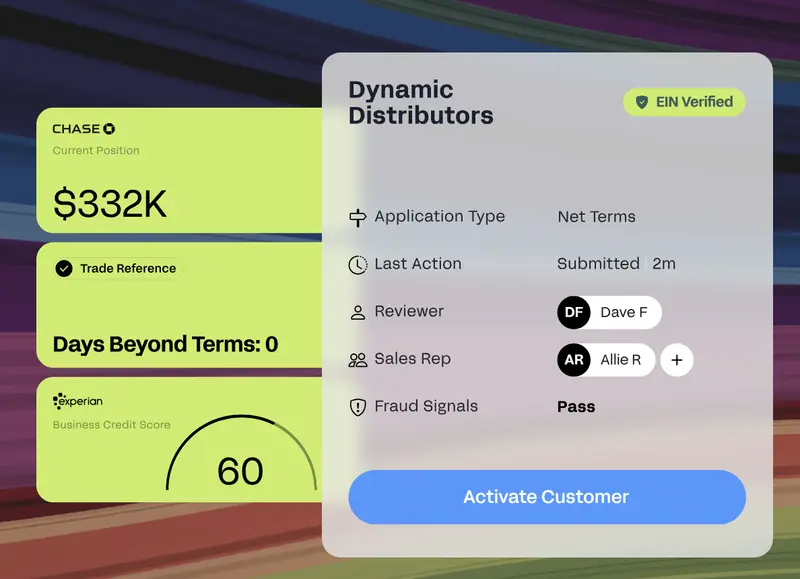
Nuvo connects the full order-to-cash cycle on one platform, from customer onboarding and credit through payments, cash application, and collections. Its AR Suite, launched in June 2026, runs the downstream half of the cycle on Nuvo Intelligence agents that work around the clock, drawing on the same customer context built upstream at onboarding and credit.
Limitations: Purpose-built for B2B trade in physical goods, not consumer lending or SaaS billing. You need to map credit policy rules and connect your ERP systems during setup.
Best for: Mid-market and enterprise B2B suppliers, distributors, and manufacturers that want onboarding, credit, payments, and collections on one connected order-to-cash network instead of stitching together separate tools.
HighRadius offers a broad order-to-cash suite for high-volume receivables operations, with AI-driven modules across credit, invoicing, cash application, deductions, and collections.

Limitations: Pricing and implementation skew toward large-enterprise budgets and timelines, which can feel heavy if you don't need the full suite.
Best for: Large enterprises with complex, high-volume order-to-cash operations that want the entire receivables cycle on one system and can support a substantial implementation.
Esker provides cloud-based order-to-cash automation sold as modules, covering order management, invoicing, cash application, collections, and credit.

Limitations: Modules are bought à la carte, and the platform is built for large, complex operations, which can be more than a mid-market team needs.
Best for: Enterprises pursuing a comprehensive O2C overhaul, or companies already on Esker adding adjacent modules.
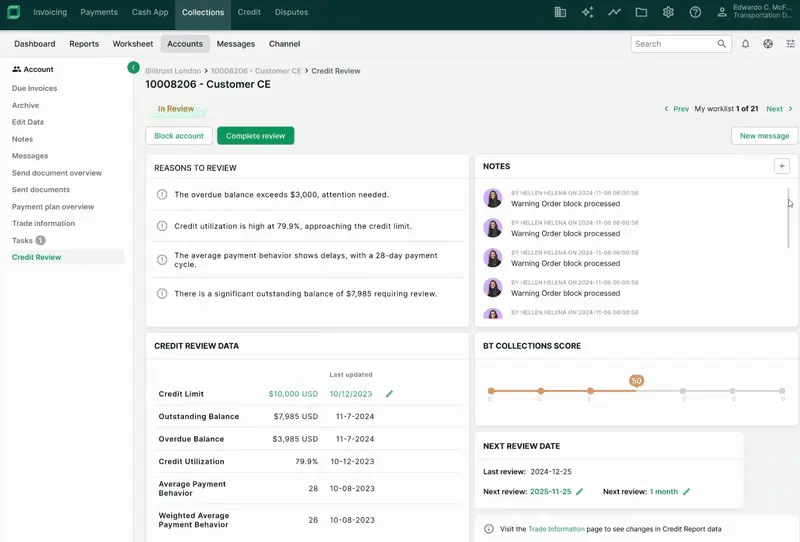
Billtrust anchors its platform in AR, connecting invoice delivery, payment acceptance, cash application, and credit within a receivables-led workflow.
Limitations: Anchored in AR and invoicing, so onboarding and credit are framed as inputs to the receivables workflow rather than a standalone customer-onboarding system.
Best for: Mid-market and enterprise companies that run credit and collections inside an AR-led platform and want faster invoicing, payment acceptance, and cash application across a high invoice volume.
Serrala automates inbound and outbound payments, with order-to-cash coverage across credit, cash application, collections, and dispute management.

Limitations: Breadth across both payables and receivables, plus a strong SAP orientation, can mean a more involved fit for teams outside that ecosystem.
Best for: Large enterprises, particularly SAP-centered finance teams, that want payments and receivables automation under one vendor.
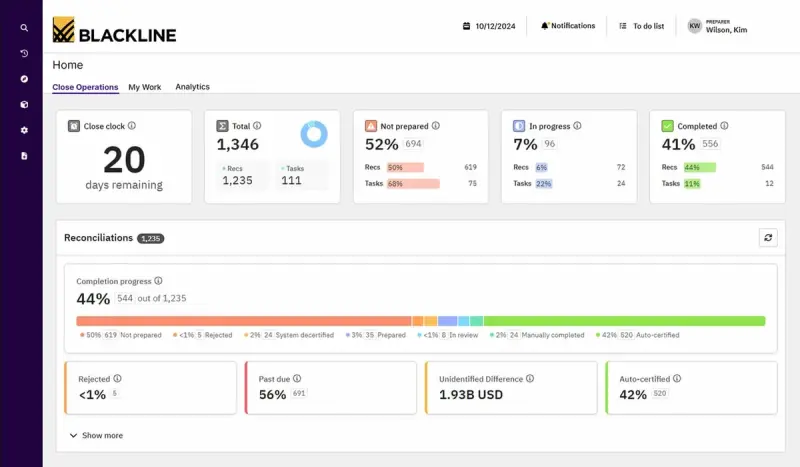
BlackLine is best known for financial close and accounting automation, with AR Intelligence and invoice-to-cash capabilities added to that foundation.
Limitations: The platform's center of gravity is accounting and close, rather than front-of-cycle onboarding and credit, so order-to-cash coverage is strongest on the finance-operations side.
Best for: Finance and accounting teams already running their close on BlackLine who want receivables analytics and cash application connected to it.
The right platform closes the gaps where your cycle loses time and cash. These capabilities determine whether it does that or digitizes the same handoffs.
The cycle starts before the first invoice, and how you bring a customer on sets up everything downstream. A platform that treats this as a credit form collects an application and a decision. One that treats it as onboarding verifies the business, decides the credit, and sets the customer up to order and pay, so an approval is something they can act on.
Strong onboarding does three things at intake:
The faster and more complete this step is, the less rework lands on AR later. Nuvo customers have cut credit approval time by 80%, taking a buyer from application to decision in hours, not weeks.
Invoicing determines whether the cycle keeps moving or stalls. Late invoices, errors, and limited payment options slow collection before customers do anything wrong.
Payment methods drive days sales outstanding (DSO) more than most finance teams realize. Businesses that offer four or more payment methods reduce DSO by five to eight days, according to Credit Pulse's 2025 DSO benchmark analysis. Each method clears on its own timeline, so customers pay through the one that's easiest for them.
Look for invoicing and payment capabilities that:
Cash application is the unassuming bottleneck. When an analyst opens every remittance email and ties it back to an invoice by hand, payments sit unmatched, and the AR ledger lags reality.
Automated cash application reads remittance documents, bank notifications, and customer emails, then matches payments to invoices as they land, giving finance a current ledger and a cash position they can plan against today.
Collections runs on information that's usually stale. An aging report is a snapshot, and by the time someone works it, customers get called about invoices they've already paid, while disputes and short pays sit unresolved.
Effective platforms here act on current data, not a static snapshot:
If your O2C platform doesn't sync with your ERP systems, you maintain customer data in two places and re-enter it by hand. The right one syncs bidirectionally, so invoices, payment status, and balances stay current in both the platform and your system of record.
This helps keep the data clean enough to trust the reporting built on it, from DSO to collections effectiveness. Look for platforms with clear audit trail and KPI capabilities.
Start by finding where your cycle actually leaks, then match the platform to that, not to the longest feature list. Work through it in this order:
A slow cycle has a measurable cost, which makes DSO a useful benchmark. APQC's accounts receivable benchmarking data puts the median across industries at 38 days, with top performers collecting in 30 or less and bottom performers taking 46 or more. Where you fall tells you how much working capital a faster cycle would free up.
The cost of order-to-cash lives in the handoffs between stages: credit decisions that don't reach AR, payments that don't reach the ledger, and collections calls on invoices already settled. Each traces back to disconnected data. The value is in closing those gaps.
Before you choose a platform, map your current cycle. Trace one customer from application to final payment and note where work stops, data gets re-keyed, or context is lost. If those gaps sit in the handoffs between onboarding, credit, invoicing, and collections, you need a platform that runs the whole loop on shared data.
See how Nuvo runs the full order-to-cash network on one platform, with AI agents and a shared source of truth from the first order to cash in the bank. Book a demo to walk through your cycle.